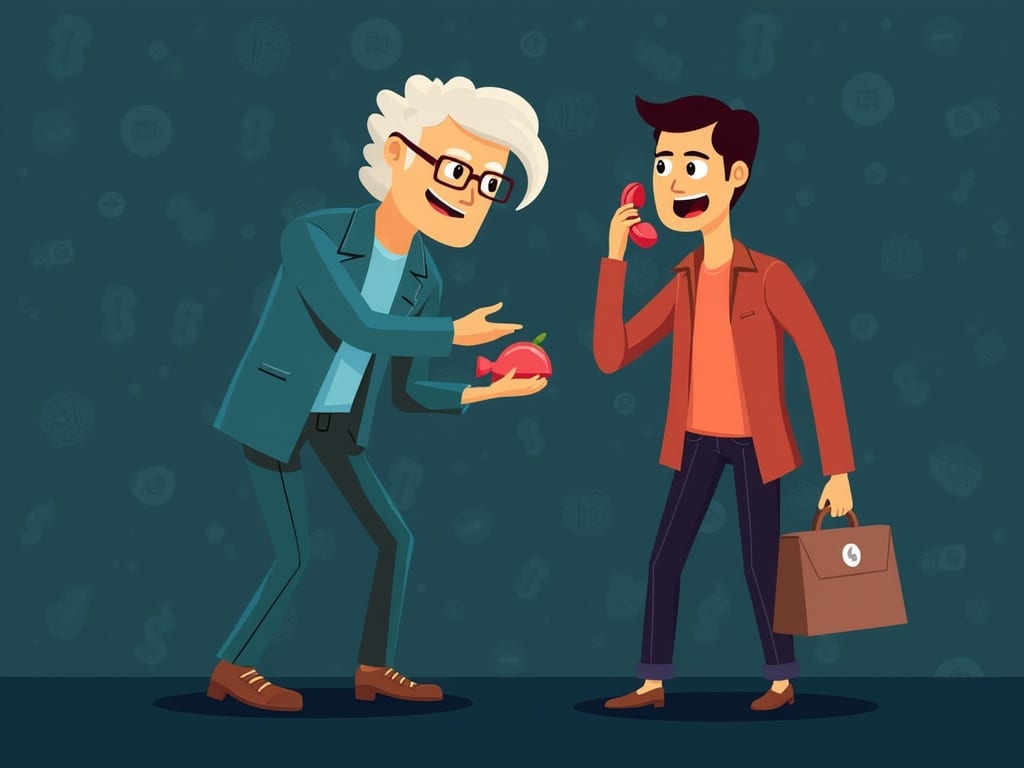
Your Call Is Very Important to Them: New Scams That Even Pros Fall For
Last spring, a colleague of mine — a woman who spent fifteen years working in cybersecurity — got a phone call that nearly cost her $12,000. The caller knew her name, her bank’s name, the last four digits of her account, and even the name of her mortgage provider. He was calm, professional, and completely convincing. She was seconds away from authorizing a wire transfer before something small — a slight hesitation in his voice — made her pause and hang up. She called me afterward, half laughing and half shaken. “I knew how these things work,” she said. “And I almost fell for it anyway.”
That story stuck with me, because it perfectly illustrates where we are right now. Phone scams aren’t the clumsy, poorly worded operations they used to be. We’re not talking about someone with a thick accent claiming you owe the IRS money and need to pay in gift cards. The new generation of phone fraud is polished, data-driven, emotionally intelligent, and terrifyingly effective — even against people who absolutely should know better. If you think you’re immune, that confidence might actually be your biggest vulnerability.
Why Phone Scams Are Getting So Much Smarter
The short answer is data. Massive data breaches over the past decade have handed criminals an extraordinary amount of personal information about nearly every adult in the United States. Your name, address, phone number, email, date of birth, partial Social Security number, account numbers, even your family members’ names — all of this is available in bulk on the dark web for surprisingly little money. Scammers don’t need to guess who you are anymore. They already know.
Add to that the rise of AI-generated voices and “deepfake audio” technology, and you have a recipe for deception that was genuinely impossible just five years ago. Scammers can now clone a person’s voice from as little as three seconds of audio — which they can easily pull from a voicemail greeting, a social media video, or a public speech. Imagine getting a call that sounds exactly like your adult son, crying and telling you he’s been in a car accident and needs money wired immediately. It’s not science fiction. It’s happening right now, in neighborhoods everywhere.
The Biggest New Scams Making the Rounds Right Now
1. The Bank Impersonation Call
This one is so sophisticated it deserves its own section. Here’s how it works: your phone rings, and the caller ID shows your actual bank’s phone number — often the exact number printed on the back of your debit card. The person on the other end identifies themselves as a fraud specialist from your bank’s security team. They tell you there’s been suspicious activity on your account and they need to verify your identity to stop an unauthorized transaction. They might already know your account balance, your recent transactions, and your home address. They ask you to confirm your PIN, your online banking password, or a one-time verification code that was “just sent to your phone.” The moment you give it to them, they’re inside your account.
What makes this so effective is a technique called “spoofing” — which allows fraudsters to disguise their caller ID to display any number they choose. Banks do sometimes call customers about fraud. So the scenario isn’t inherently unbelievable. And when someone already knows so much about you, it’s natural to assume they must be legitimate. The rule to remember: your real bank will never ask you for your PIN, password, or one-time code over the phone. Full stop. If you get this call, hang up and call the number on the back of your card directly.
2. The “Grandparent Scam” — Now With AI Voices
This is the one that keeps me up at night. Older adults receive a frantic call from someone who sounds exactly like their grandchild. The “grandchild” says they’ve been arrested, or in an accident, or are stranded abroad, and they need money immediately — but please don’t tell Mom and Dad. A second person then gets on the line, posing as a lawyer or bail bondsman, and provides wire instructions. Families have lost tens of thousands of dollars in a single afternoon to this scam. The AI voice cloning makes it almost impossible to detect in real time, especially when emotions are running high and the caller is begging you to act fast.
3. The Social Security Administration or IRS Callback
You receive a voicemail — often from a spoofed government number — saying your Social Security number has been “suspended” due to suspicious activity, or that you owe back taxes and a warrant has been issued for your arrest. You’re instructed to call back immediately. When you do, a convincing “agent” walks you through a process that ends with you sending money via wire transfer, cryptocurrency, or gift cards. The urgency and official tone are designed to override your rational thinking. Government agencies communicate through official mail first. They do not call and demand immediate payment — ever.
4. The Tech Support Scam — Upgraded
You get a call — or sometimes a pop-up that triggers an automated call — from someone claiming to be from Microsoft, Apple, or your internet service provider. They say they’ve detected a virus or a serious security breach on your device. They ask you to download a remote access tool so they can “fix” the problem. Once they have access to your computer, they can see everything: saved passwords, banking information, tax documents, anything. Some victims have watched helplessly as the scammer transferred money right before their eyes. Others discover the damage days later when it’s far too late.
5. The Crypto Investment Call
This one often starts on social media or dating apps, but it frequently shifts to phone calls once a “relationship” has been established. You meet someone online who seems genuine and successful. Over days or weeks, they build trust. Eventually, they mention a cryptocurrency investment platform where they’ve been making incredible returns. They walk you through setting up an account, making a small initial deposit, and watching your “profits” grow on a dashboard that looks completely real. When you try to withdraw, you’re told you need to pay fees or taxes first. The platform and the person both disappear once you’ve sent enough money. This is called “pig butchering,” and victims have lost millions — sometimes their entire retirement savings.
The Psychology Behind Why These Work
Understanding why smart, capable people fall for these scams requires a quick trip into behavioral psychology. Scammers are expert manipulators who specifically target the parts of our brain that don’t respond well to stress. They use several reliable pressure points:
- Urgency: “You must act in the next 30 minutes or your account will be permanently closed.” Urgency shuts down careful thinking.
- Authority: Impersonating government agencies, banks, or law enforcement triggers an instinctive tendency to comply.
- Fear: Threats of arrest, frozen accounts, or harm to a loved one spike cortisol and cloud judgment.
- Social proof and trust: When someone already knows personal details about you, your brain interprets that as legitimacy.
- Isolation: “Don’t tell anyone, this is a private security matter.” Keeping you from consulting others is intentional.
None of these are signs of weakness. They’re fundamental features of human cognition that scammers have studied and refined. Even the most analytically trained minds can be caught off guard when these buttons are pushed simultaneously and without warning.
A Quick Reference: Scam Red Flags at a Glance
| Red Flag | What It Usually Means |
|---|---|
| Caller asks for gift cards, wire transfer, or crypto | Almost always a scam — no legitimate entity uses these for debt or fees |
| Extreme urgency, pressure to act immediately | Designed to prevent you from thinking clearly or consulting anyone |
| Request for one-time verification codes | They’re trying to access your account right now using those codes |
| Caller tells you not to tell anyone | Isolation tactic — a massive warning sign |
| Caller already knows personal details | Purchased data — familiarity is used to fake legitimacy |
| Spoofed caller ID from a trusted organization | Call ID can be faked — always hang up and call back on a verified number |
What to Do If You Get One of These Calls
The single most powerful thing you can do is also the simplest: hang up. You don’t owe a stranger — even one who sounds official — your continued attention. If the call claims to be from your bank, your credit card company, or a government agency, hang up and independently look up their official number. Don’t use any number the caller provides, and don’t call back the number that called you. Go to the official website, find the customer service number, and call that. This one habit can stop almost every phone scam in its tracks.
If you’re worried about a loved one — especially an elderly parent or grandparent — consider establishing a family code word. It sounds a little dramatic, but it’s genuinely effective. Agree on a word that only family members know, and instruct them to use it in any emergency situation where money is involved. If someone calls claiming to be your grandson but doesn’t know the code word, it’s not your grandson.
You should also report scam calls to the FTC at ReportFraud.ftc.gov. It takes five minutes and helps build the data the government needs to track and prosecute these operations. If you’ve already sent money, call your bank immediately — time is critical in recovering wire transfers — and file a report with your local police as well as the FTC.
Protecting the People Around You
Here’s something worth sitting with: you might be reading this and feeling confident you’d never fall for these tactics. But what about your parents? Your grandparents? A friend who’s going through a stressful time and might be more vulnerable than usual? Sharing this information is genuinely one of the most useful things you can do. Talk to older family members specifically — not in a condescending way, but in a “hey, I read something wild and wanted to share it” kind of way. Normalize the idea that anyone can be targeted, that being fooled isn’t a sign of stupidity, and that the safest response to any unexpected call asking for money or personal information is always to pause, hang up, and verify independently.
Banks and financial institutions like BankCert are increasingly investing in consumer education around fraud because the problem is growing faster than enforcement can address it. Staying informed — reading up on the latest scam tactics, checking your accounts regularly, setting up transaction alerts — isn’t paranoia. It’s just good digital hygiene in an era when your personal data is more exposed than ever before.
The Bottom Line
The days when you could spot a phone scam by its broken English and implausible premise are long gone. Today’s fraudsters are running sophisticated operations with real infrastructure, real research, and real psychological strategy. They’re patient, they’re professional, and they’re very good at what they do. That’s not meant to be scary — it’s meant to be a realistic picture of what we’re dealing with so we can respond accordingly.
My cybersecurity colleague hung up in time. But she’ll be the first to tell you it was a close call — and that the experience fundamentally changed how she answers the phone. A little healthy skepticism, a habit of hanging up and calling back independently, and honest conversations with the people you love can make all the difference. The scammers are counting on your good manners, your trust, and your fear. Don’t give them the opportunity to use any of it.